SamovAR
Scroll down for project info.
Scroll down for project info.
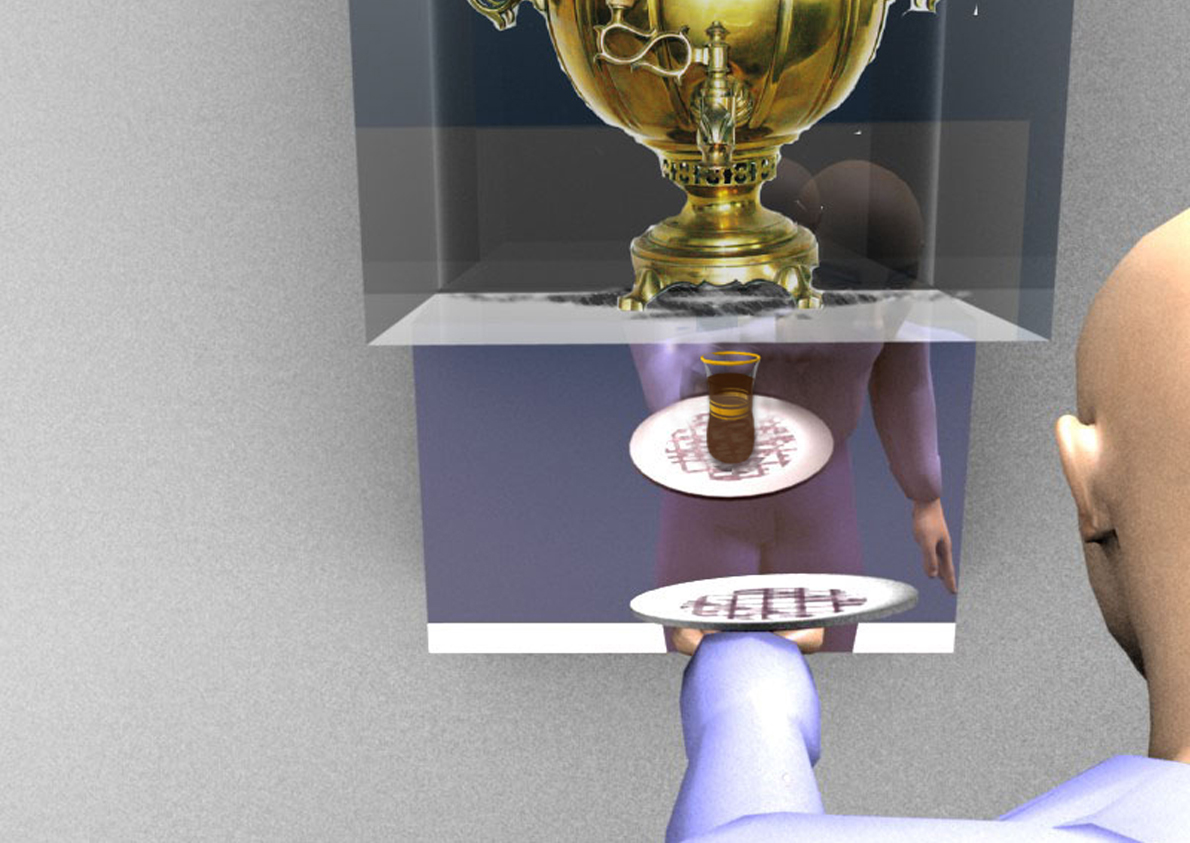
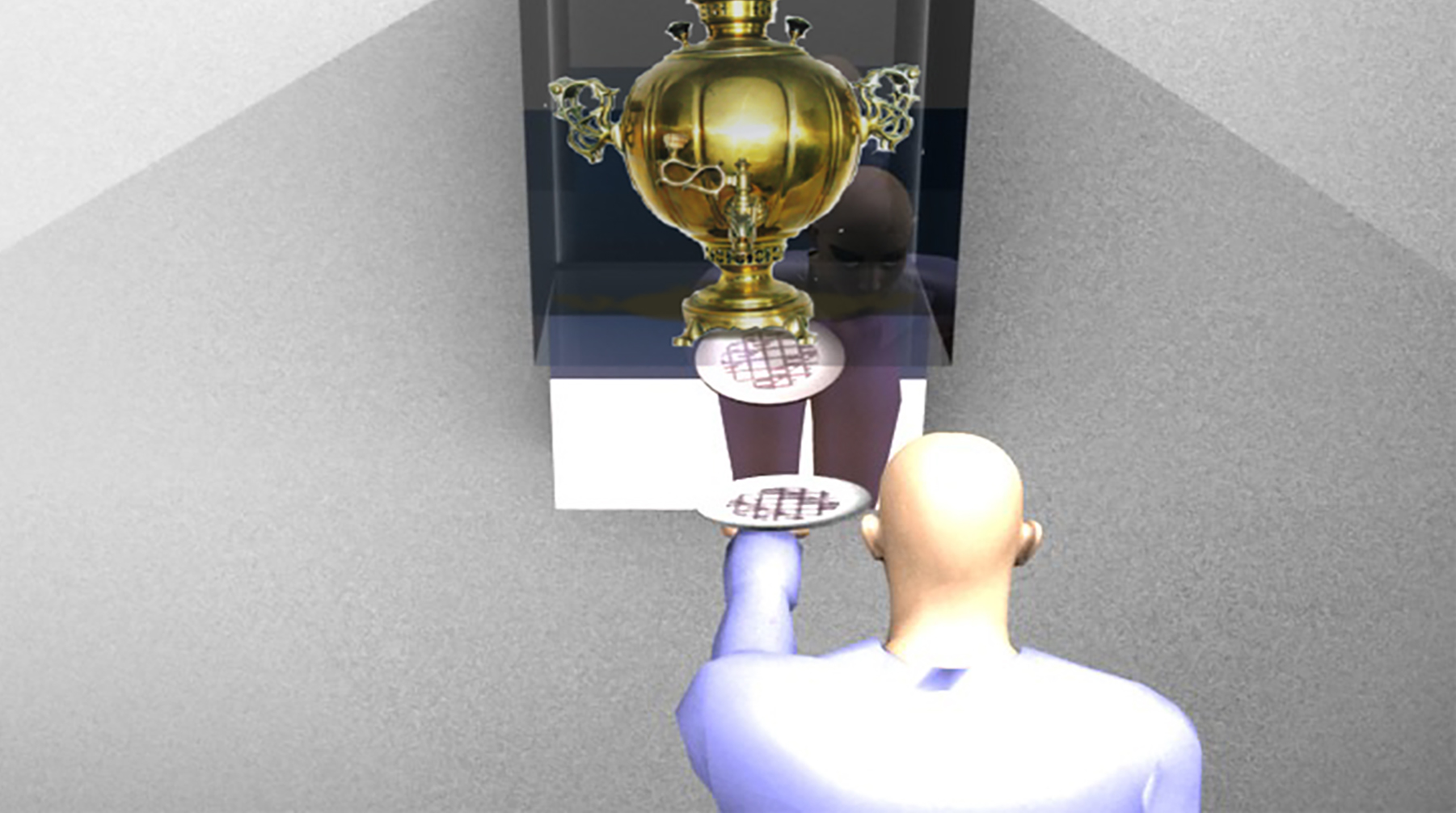
An Augmented Reality (AR) Installation: Antique brass samovar fitted inside clear plexi-glass case approximately 30"x20"x18", iOS tablet, fluid dynamic algorithms, porcelain saucers printed with custom designed AR markers.
In this installation the Samovar is examined as part of a tradition of sharing and serving beverages and enjoyment of lingering conversations in a communal setting. The early Samovar, an elaborate pot used as centerpiece to heat water to prepare tea, used had the dual purpose of warming bodies and stimulating minds. There are many different types of samovars that are intricate and unique artistic expressions. In this interactive installation the artist will revisit this centuries old cultural tradition that ranged from lavish social affairs to intimate hearthside family gatherings. Incorporating the use of Augmented Reality (AR) technology, the artist will reproduce the experience of the tea ceremony, however, the tea itself will be an optical effect of the technology and programming. With acute potential to change the nature of perceived "reality," AR is now understood as a new human interface - a new way of seeing, viewing, interacting, enabling the exploration of scenarios that don't exist in the "real world" however are experienced in "real time. Transformation of visual perception and the fusion of simulated reality and the unadulterated human gaze lead the artist to explore the proliferation of new "realities" and their burgeoning interpretations. The spectacle and stimulation of high technology will stand in for the actual real experience of consuming a hot beverage in social setting, giving participants an opportunity to reflect upon the advantages and deficits of the promises of technology in cultivating human interaction and growth.
A loveseat is centered at the far end of a ten by eight ft. space demarcated by rope lining the floor. In front of the loveseat is a coffee table with two glass jars filled with money, a clipboard stacked with marriage contracts, an hourglass, and a small bowl of honey. To the far right is a clothing-rack where many identical white shirts hang. Next to the rack is a small table with perfume, ties, razors, and accessories on it. At the opposite end of the space directly in front of the loveseat, there are two candleholders with a television set in between, which also functions as a mirror. The artist/groom sits on the loveseat waiting for his next spouse, brought by the best man or made-of-honor. They begin to verbally negotiate the terms of their temporary marriage (Mut'ah/Sigheh). A Polaroid photo is taken of the couple as they commence to perform the terms of their marriage (including anything from kissing, to moving furniture together, to touching elbows, etc). At the end, the spouse is handed a copy of the fulfilled contract placed in an extravagant envelope, and sealed with a candle wax stamp. Now alone, the artist takes both the Polaroid photo and the original marriage contract and files them in a wedding album, then placed behind the loveseat so patrons can view the ceremonies that passed. Between each performance, the artist hums, sings, and lights candles. He changes his clothes; sprays himself with rosewater perfume—preparing for his next marriage.